Rights and licensing shape everything
Content rights, royalties, and territory restrictions aren't metadata footnotes — they constrain what every feature can legally show, play, or recommend.
Music and media products live on enormous catalogs, fickle discovery, real-time playback, and rights that can't be guessed. We build the catalog intelligence, recommendation, and rights-aware experiences that make AI usable here — by the team behind Yamaha NoteStar and PlayAlong.
Music and media is its own kind of hard — enormous libraries, unforgiving playback, and rights you can't approximate. Here's the terrain.
Content rights, royalties, and territory restrictions aren't metadata footnotes — they constrain what every feature can legally show, play, or recommend.
Millions of tracks, scores, or assets with messy, partial metadata in a dozen formats. The signal is real, but it's buried under decades of inconsistency.
Attention is scarce and the long tail is enormous. Whether someone finds the right track, score, or clip is the difference between engagement and a bounce.
Playback, audio-to-score sync, and auto-scrolling have to be frame-accurate across devices. A few milliseconds of drift and a musician loses their place.
Pulled from real conversations with product and catalog leaders at publishers, platforms, and media companies.
Inconsistent tags, missing fields, and a dozen formats mean search, rights checks, and recommendations are all built on sand.
Everyone sees the same hits while the catalog's depth goes unseen. Generic search and recommendations leave engagement — and revenue — on the table.
Confirming what can be shown, played, or licensed where is slow, human, and error-prone — and a single mistake is a legal problem, not a bug.
Transcription, tagging, formatting, and clearance are done by hand. How fast you can publish caps how fast the catalog — and the business — can grow.
Each engagement is shaped by your catalog, your rights model, and your product. These are the most common entry points for music & media clients.
Map the highest-value AI opportunities across catalog, discovery, rights, and content ops — with your metadata and licensing realities priced in.
Explore the audit →Automate metadata tagging, transcription, content formatting, and rights checks — the manual catalog work that caps how fast you publish.
See automation →Discovery, curation, and rights-clearance agents that work across the catalog and act with auditable handoffs to your team.
See agents →For media builders shipping a real product — playback, audio-to-score sync, recommendation, and catalog experiences at scale.
See product build →Three weeks to a working prototype on your real catalog — validate discovery, sync, or rights automation before you commit the roadmap.
See the sprint →Media engagements start with diagnosing the catalog and rights, validate fast, then ship the experience and keep tuning it.
Map where AI moves a metric — catalog, discovery, rights, or content ops — with your metadata and licensing realities priced in.
A working prototype on your real catalog — validate discovery, sync, or rights automation before committing the roadmap.
Ship the playback, recommendation, or rights-aware experience into production — wired to your catalog and licensing data.
Drive discovery, engagement, and catalog depth with experiments that compound month over month.
The catalog and playback products behind some of the most-used music apps on the planet.

We built and scaled NoteStar — interactive sheet music with synchronized backing tracks — into the world's largest iPad sheet music platform, with a global catalog and millions of users.
Read the case →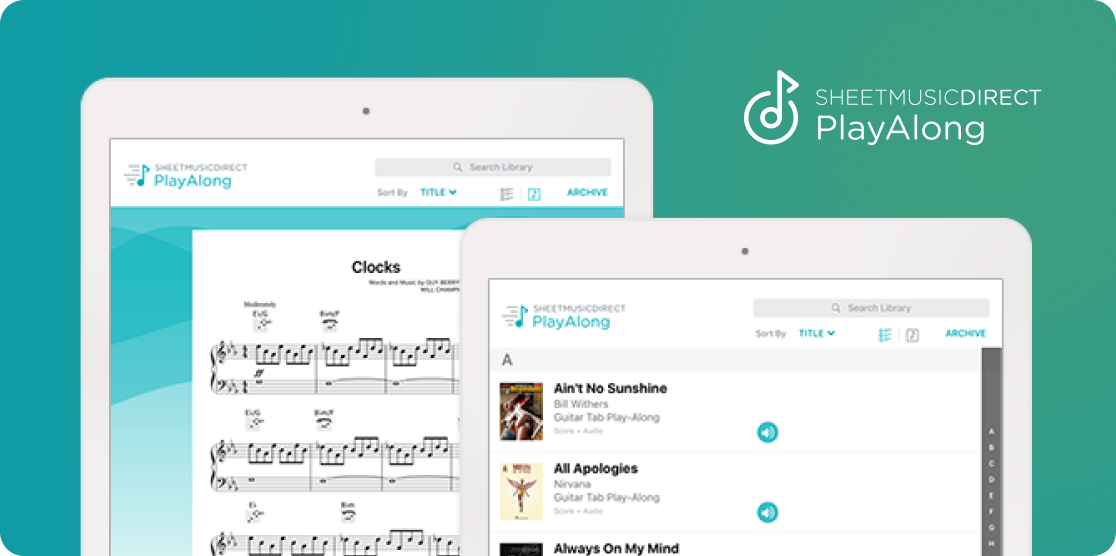
Real-time pitch correction and synchronized backing tracks across 1.1M arrangements. A 6-month initial build that grew into a multi-year partnership; now owned by Hal Leonard.
Read the case →AI and products we've built for music and media.
Music and media is unforgiving — and it's exactly the kind of product we've shipped to millions before.
Frame-accurate audio-to-score sync, auto-scroll, and low-latency playback across devices — the hard part of NoteStar and PlayAlong, shipped.
Cleaning, enriching, and searching millions of messy records — the metadata and retrieval work that makes discovery and rights automation possible.
Licensing, territory, and royalty constraints modeled into the data layer — so every feature respects the rights instead of guessing at them.
Rights, messy catalogs, real-time playback, recommendation, and who owns the IP.
We model licensing, territory, and royalty constraints into the data layer so they shape what every feature can show, play, or recommend — with human review on anything ambiguous. Rights are a first-class input, not an afterthought.
That's the normal starting point. We clean, enrich, and normalize messy, partial metadata across formats — then build search, discovery, and rights automation on top of a catalog you can actually trust.
Yes — it's the hard part of NoteStar and PlayAlong, and it's core to what we do. Frame-accurate sync, auto-scroll, and low-latency playback across devices are designed in from day one.
We build retrieval and recommendation on your enriched catalog and real usage data — surfacing the long tail, not just the hits — with guardrails so results stay rights-compliant and on-brand.
If you already know the use case, you can start with a prototype or build. If you're exploring where AI moves a metric across catalog, discovery, rights, or content ops, the audit is the right first step.
You do. All code, models, prompts, and trained artifacts are yours under standard work-for-hire terms. Your repos, your cloud, your catalog — no lock-in.
Field notes from the studio — what we’re learning about AI products, agent UX, and the messy reality of shipping software in 2026.