The page became the screen.
The musician's music stand was always going to become a tablet — the question was who would build the app that earned the spot. The iPad's resolution, audio quality, and gestures were finally enough to replace the binder.
Yamaha came to us with the brand, Noteflight brought the catalog engine, Hal Leonard and MusicSales brought the rights, and the iPad brought a new way to read music. Nine months later we shipped the app behind the largest community of music writers and readers anywhere in the world.
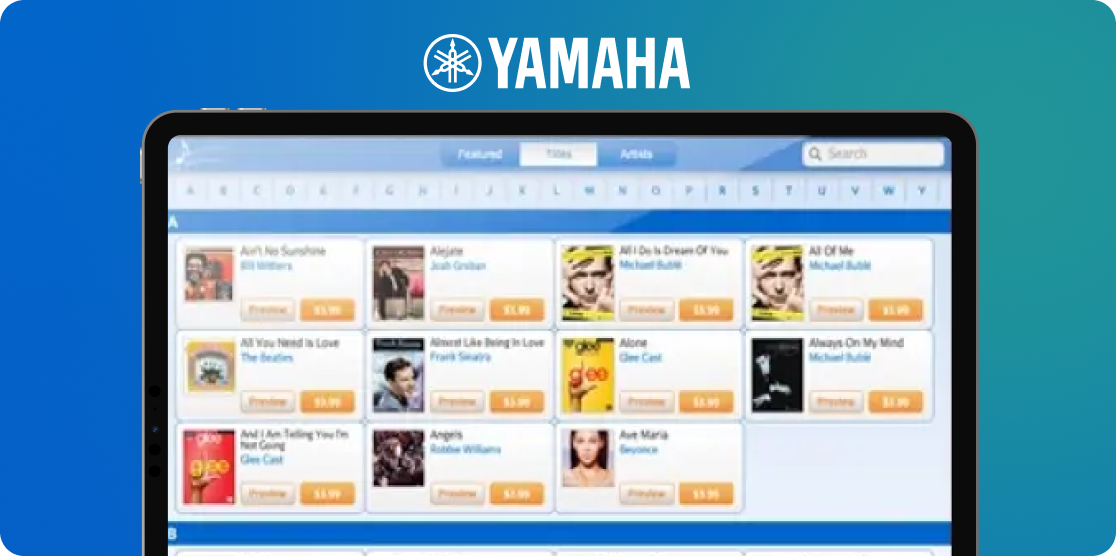
The 2014 shift from the PC to the tablet rewrote what a music product could be. Yamaha, Noteflight, and our team set out to build the first iPad-native sheet music store and player — a global catalog of music you could browse, buy, and actually play, in one app.
The musician's music stand was always going to become a tablet — the question was who would build the app that earned the spot. The iPad's resolution, audio quality, and gestures were finally enough to replace the binder.
A multi-national music company at the top of the industry, with the reach to put a sheet music app on every iPad and the relationships to fill it. Noteflight brought the catalog engine and the publishing pipeline behind it.
Most music products solve one of those three. The bet here was that the right app could do all three in one place — the store and the score running on the same device, with rights, payments, and playback all behind a single sign-in.
“Rocket Farm provided a thoughtful and innovative process that got us through a lot of design challenges in a short time. Their work on NoteStar demonstrates the ability to create products that are smooth running, innovative, and well designed.”

The hard part of NoteStar wasn't any single screen — it was the orchestration. Five organizations had to ship a single product, with the storefront, the catalog, the rights, and the playback engine each owned by someone different.
Yamaha's eCommerce engine. Noteflight's publishing server. DRM servers for Hal Leonard and MusicSales. Plus our build. Every contract, every API, every release boundary had to line up to the same launch date.
Pitch correction and tempo changes that had to feel instant, running on iPad hardware, while sheet music kept rendering and pages kept turning to the beat. Signal processing wasn't a feature — it was the product.
An HTML5-wrapped storefront for browsing and buying. A native iPad player for reading and performing. Both running under the same brand, the same sign-in, and the same product launch.
We split the design effort into two parallel phases — the storefront and the player — because the rules of each were genuinely different. What kept the app feeling like one product was an architecture that knew how to hand off between them.
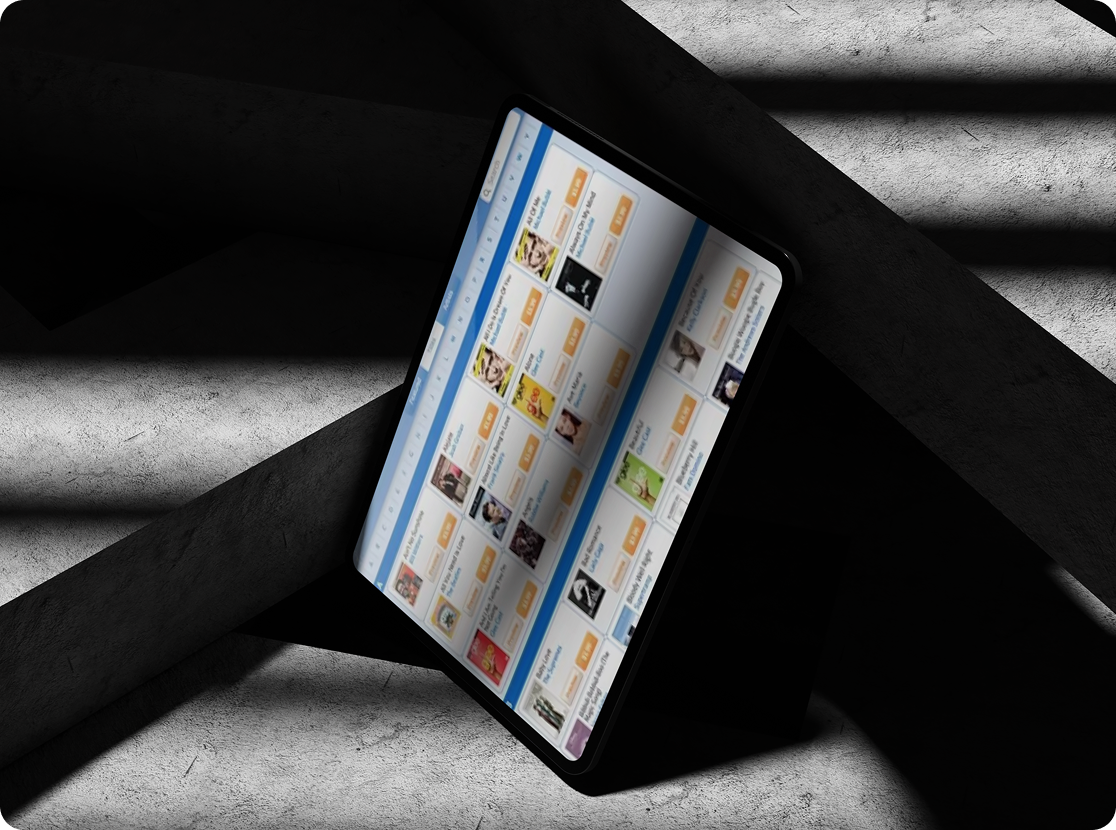
The store was modelled after iTunes — free-form catalog browsing with curated surfaces Yamaha's marketers could programme: featured artists, genre rows, themed collections, new releases. It ran in HTML5 inside the native iOS shell, so Yamaha's commerce team could iterate on it the same way they iterated on the web.
The player was the harder problem and the more inventive one. Once a musician downloaded a score, the app had to read that score back to them: render the music, play the audio, turn pages on cue, scale the notes when the page resized, change pitch and tempo on demand, let the user set loop points to drill a passage, accept annotations, and respond instantly to the gestures the iPad made possible. Every one of those was a separate design problem, and we tested every one of them with real musicians as we built — because paper designs don't tell you whether a page-turn animation lands in the right beat.
The IA's job underneath all of this was the bridge. The store handed catalog metadata to the player. The player handed performance state back to the store for "buy the next one in the series" surfaces. Sign-in, library, payments, and DRM ran across both sides. The architecture made that handoff feel like one product even though the underlying machinery was deliberately split.
“Rocket Farm Studios were extremely agile in how they presented and iterated on design — whether for the HTML5 store portion or the much more expressive set of interactions incorporated into the playback aspect of the app.”
The iPad UI rules in this product had to honour two things at once: the muscle memory of a working musician reading off a score, and the gesture vocabulary the device made possible. Three rules ran every review.
When a musician is reading, the UI gets out of the way. No coaching, no animation budget on the score itself, no chrome competing for attention with the notes. The page is the product; everything else hides until you ask for it.
The page-turn animation isn't decorative — it's a beat-locked event. Tied to playback, it lands when the musician would have turned the page themselves. Off-tempo turns broke the read, so the engineering went deep here.
Pinch to scale, tap to set loop points, swipe to seek, hold-press to annotate. The vocabulary mirrors what working musicians already do with a physical score and a pencil — they just don't have to put the iPad down first.
The shipping product runs across native iOS, HTML5, the Yamaha commerce stack, the Noteflight publishing server, and two separate DRM systems. Here's the surface area our team owned.
An iTunes-style browsing surface wrapped inside the native shell — featured artists, themed rows, search, and the curation surfaces Yamaha's marketers run their programming through.
A purpose-built score reader: high-resolution rendering, real-time audio, gesture vocabulary, and the score-engine layer that brings a downloaded purchase to life on the tablet.
Signal-processing pipeline on the iPad itself — change the key, change the speed, do both, with no perceptible latency. Practising a piece slowly used to mean a separate audio app; here it's one tap.
Page-turn animations synchronised with audio playback. The turn lands on the bar where a musician would have turned it themselves — the kind of feature that doesn't feel like a feature, which was the point.
Set a start and an end and drill a passage on repeat. Tap to mark up the score. Both stored against the user's library and synced back across the platform.
Direct integration into Yamaha's eCommerce engine, Noteflight's publishing server, and the DRM servers for Hal Leonard and MusicSales — purchases land in the player with rights honoured, end-to-end.
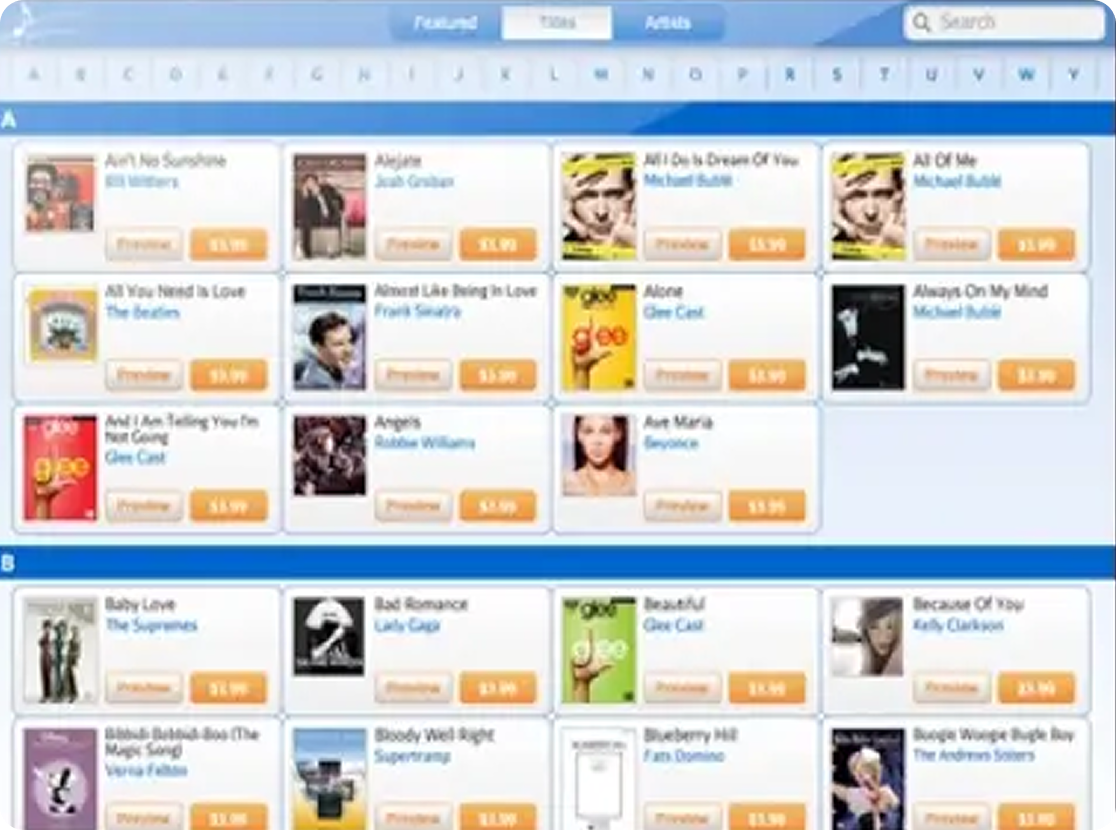
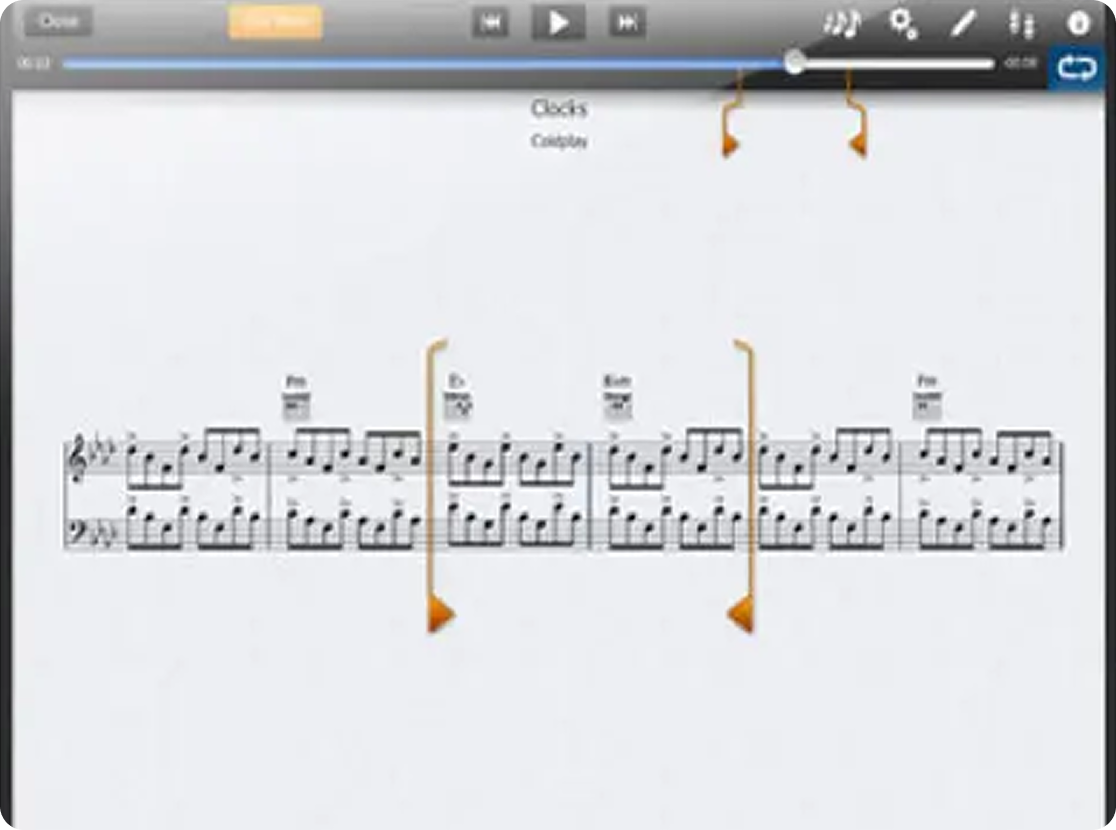
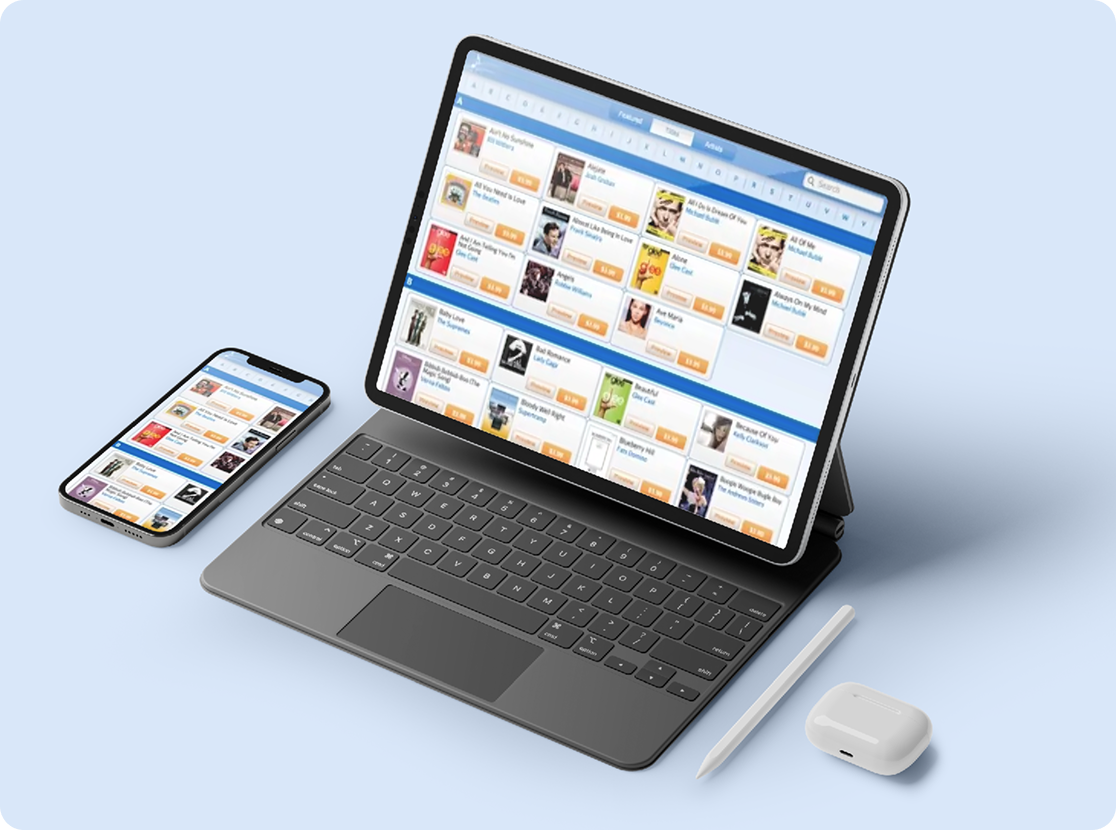
A confident studio-blue palette anchored by an amber accent — the colour of stage lighting, of warm valve audio, of a band rehearsing past sundown. Inter carried the type system so the score always stayed centre-stage.
Aa Bb
Noteflight today carries more than 6.97 million active members and is still growing daily — the community the iPad app made possible and the catalog it surfaced.
A coordinated iOS + HTML5 product running on the Yamaha brand, integrated into Noteflight's catalog, and rights-cleared across Hal Leonard and MusicSales. Nine months from kickoff to in market.
The community has grown to almost seven million writers and readers — the largest iPad sheet music platform in the world, and the one most of the industry compares its own products against.
The features that were the hardest to engineer — real-time pitch, real-time tempo, the page-turn synced to playback — are still the ones the community uses every day. The thing that was inventive at the time is still load-bearing now.
“Their work on NoteStar demonstrates the ability to create products that are smooth running, innovative, and well designed.”
If the NoteStar story is the shape of your build — multi-party integration, real-time media, a single product that has to feel coordinated end-to-end — here's where else our team has shown up across the portfolio.