The world's largest print-music publisher.
Sheet Music Direct sits at the centre of how musicians actually buy sheet music — Hal Leonard's digital storefront, decades of catalogue arrangements, every instrument, every genre, every skill level.
Sheet Music Direct — the world's largest print-music publisher, founded by Hal Leonard — asked us to put their entire catalog on a tablet, with real-time pitch and tempo, beat-locked page-turns, and an in-app store the catalog could grow into. We shipped in six months and have been working on Sheet Music Direct apps ever since.
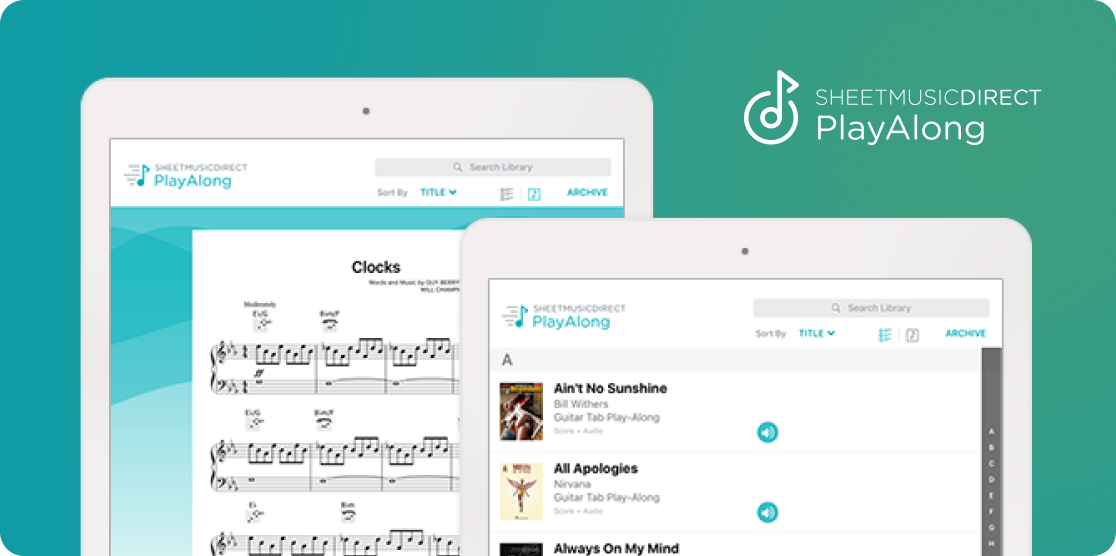
Sheet Music Direct — founded by Hal Leonard, the world's largest print-music publisher — wanted to put the entire arrangement library inside a single tablet app. Not a static reader. A mobile recording studio.
Sheet Music Direct sits at the centre of how musicians actually buy sheet music — Hal Leonard's digital storefront, decades of catalogue arrangements, every instrument, every genre, every skill level.
The bet: combine the iPad's audio + graphics + gesture capability with the depth of Hal Leonard's arrangement catalogue to create a sheet music product nobody in the category had built before.
Real-time pitch and tempo. Backing tracks that play along. Sheet music that turns pages on the beat. A catalogue you can browse, buy, and play without ever leaving the surface.
“Sheet Music Direct set out to create a new type of digital sheet music experience. This would become the first app of its kind.”
A musician will forgive almost any flaw before they forgive a beat that's off. The hard engineering of PlayAlong was real-time — audio that kept time, graphics that kept pace, and a recording-studio loop that didn't drop a frame.
Signal processing on the iPad itself — change the key, slow the tempo, speed it back up, all without leaving the page. Practising a passage at half speed used to mean a separate app; here it's a control on the score.
Page-turn animations synchronised to playback. The turn lands on the bar where a musician would have turned it themselves — not decoration, an engineering problem solved deep in the timing layer.
The recording-studio surface had to feel native to the music itself — backing tracks aligned, loop points marked against the score, every tool reachable without leaving the page the musician was reading.
The app keeps the musician's actual workflow in mind from end to end: open library, find a piece, drop into the score, practise it at the tempo and key that matches the day. The IA's job was to make that flow feel like one motion.
The user library was the first surface and the one most users would touch every session — a personal collection of arrangements, organised the way a musician already organises their pieces: by what they're working on now, what they've practised recently, and what's queued up for next. The architecture borrowed from how music apps already work, not how digital-publishing apps used to.
The music viewer was the load-bearing surface. Once a score was open, every tool a musician would reach for — playback, pitch, tempo, loop points, backing tracks, the in-app store for related arrangements — had to be on hand without breaking the read. The designers and developers worked with Sheet Music Direct's own design team to land on a vocabulary that felt feature-rich without ever feeling busy.
Underneath all of it, the eCommerce surface ran on Apple's in-app purchase — every arrangement a one-tap unlock that landed in the library and opened in the viewer instantly. The store wasn't a separate app section; it was a layer on top of the score the user was already looking at.
“At its core, the app uses audio signal processing pitch changes, which speed up or slow the score down. Rocket Farm kept the graphics on-screen synced precisely with the audio playback as musicians play along.”
A sheet music app for musicians has more controls than almost any consumer category — pitch, tempo, key, loop, backing tracks, library, store. The UI rules ran tight to keep the surface usable.
When the score is on screen, the score is the product. Controls fade out of the way when they aren't needed, surface back when the musician reaches for them, never compete with the bars and notes the musician is actually reading.
Pitch and tempo on the surface a musician already looks at. Loop points where the musician would mark them with a pencil. The vocabulary borrowed from how a working musician already practises — no invented gestures, no learning curve.
Buying the next arrangement isn't a context switch — it's an inline action. A one-tap unlock from inside the music viewer, with the new score open in the same session. The catalogue is part of the practise loop, not separate from it.
The shipped PlayAlong app runs across the iPad's signal-processing pipeline, the music viewer, the user library, the recording-studio loop, and the Apple in-app purchase storefront. Here's the surface area our team owned.
A personal collection of arrangements organised the way a working musician thinks — what they're practising now, what they've used recently, what's queued for later.
The load-bearing surface — a purpose-built score reader with the audio pipeline, the gesture vocabulary, and every practice control reachable from the page the musician is reading.
iPad-side signal processing — change the key, change the speed, do both, no perceptible latency. Practising a piece slowly is one tap, not a separate app.
Page-turn animation synchronised with audio playback — turns land on the bar where the musician would have turned themselves. A feature that's invisible when it works, which is the point.
Set a loop, drill a passage, mark a section, run it again at half speed. Every practice tool a musician would reach for, on the same surface as the score.
Native IAP integration — buy an arrangement, it lands in the library and opens in the viewer instantly. The store is a layer on top of the score, not a separate app section.
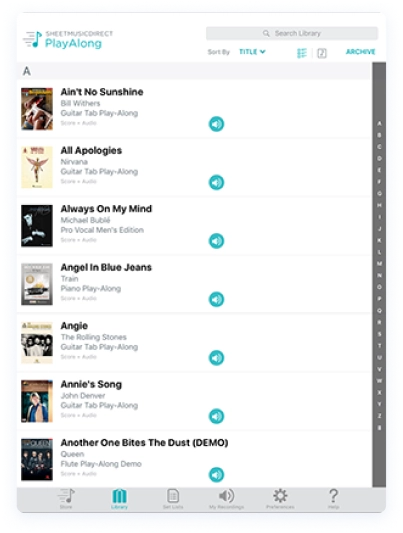
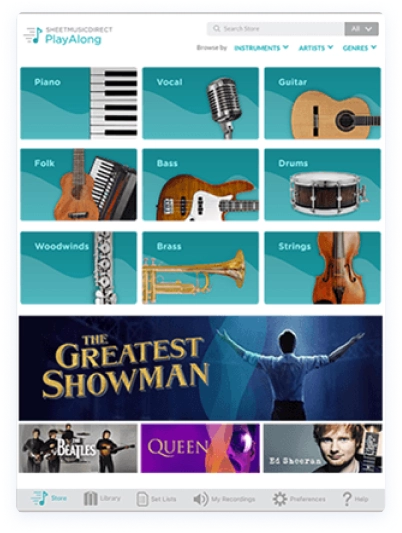
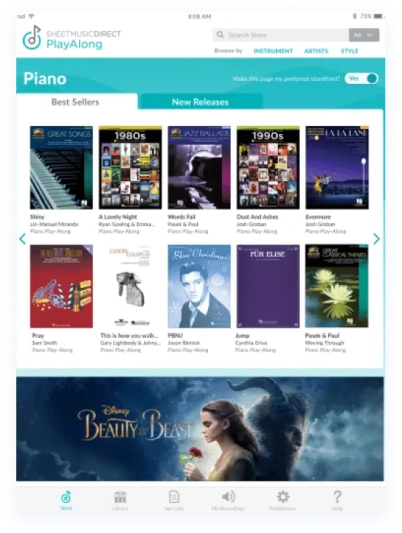
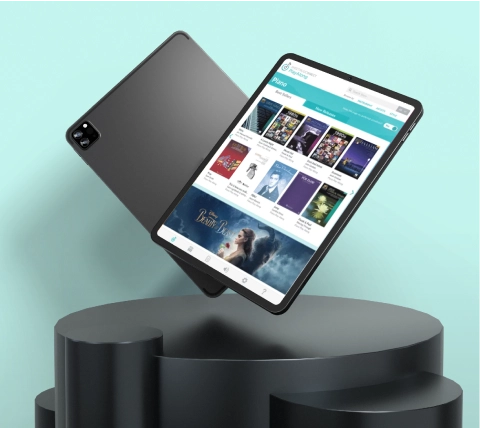
Sheet Music Direct's PlayAlong palette runs a deep-teal anchor with cool cyan highlights and a soft mauve-grey supporting cast — calm enough to recede behind the score, deliberate enough to look like a studio app rather than a publishing one.
PlayAlong shipped in six months and grew into a multi-year partnership. The catalogue inside the app now spans 1.1M+ arrangements — every instrument, every genre, every skill level. The team continues to work on Sheet Music Direct's product line today.
An iPad-native music product with real-time pitch, real-time tempo, beat-locked page-turns, an integrated user library, and an Apple-IAP catalogue — all six months from kickoff to in market.
Unlimited access to over 1.1 million arrangements for every instrument, genre, and skill level — Hal Leonard's catalogue depth, available inside the app the moment a musician unlocks it.
Sheet Music Direct selected Rocket Farm as their preferred mobile-application development partner. The team is still working on Sheet Music Direct apps today — multi-year, every iteration, since 2014.
“Sheet Music Direct has selected Rocket Farm as their preferred mobile-application development company of choice.”
If the PlayAlong story is the shape of your build — real-time media, multi-party catalogue work, a product that has to feel native on day one — here's where else our team has shown up across the portfolio.