The core technical challenge was continuous background sensor collection on iOS without killing battery life. GPS polling, accelerometer sampling, and metadata logging all compete for power — and iOS aggressively throttles background processes. We had to find the right sampling intervals and batching strategies so the app could run for weeks without the participant noticing a battery hit or the phone's OS terminating the process.
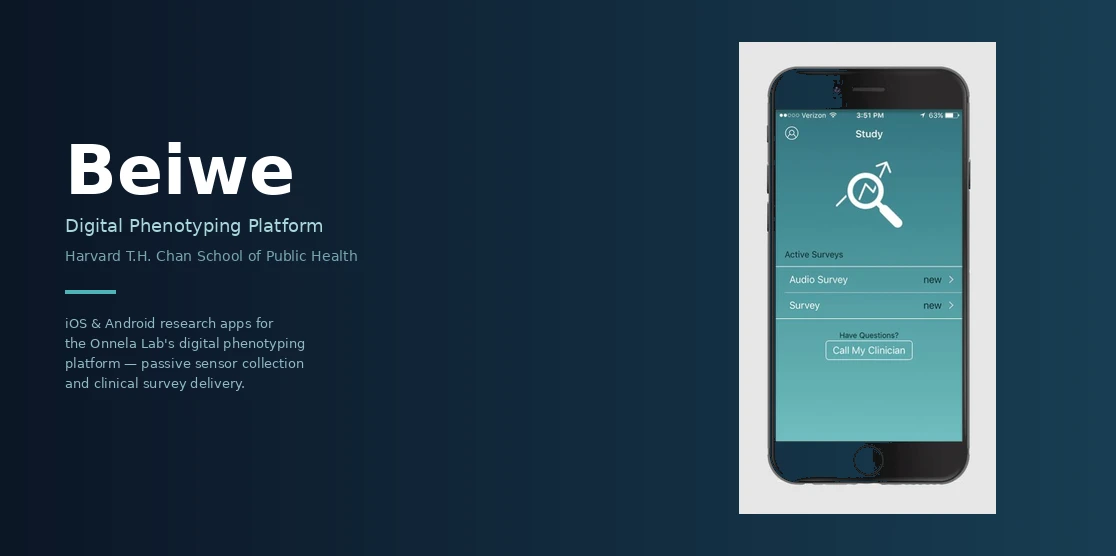
On top of passive collection, the app needed to deliver active data collection through customizable surveys built on Apple's ResearchKit framework. Consent flows, survey scheduling, branching logic, and response encryption all had to work inside the same app that was quietly capturing sensor data in the background. The two modes — passive and active — could not interfere with each other.
Every piece of data had to meet the privacy and security standards demanded by academic Institutional Review Boards. That meant end-to-end encryption, no raw GPS coordinates leaving the device without obfuscation controls, and a backend architecture that kept participant identity separated from sensor streams. This wasn't a feature request — it was a prerequisite for the studies to be approved at all.